
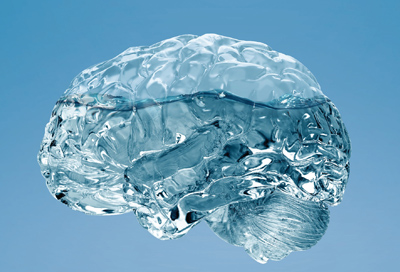
If it is about taking care of the brain, it is better to drink water. Our brain appreciates (needs) mental gymnastics, but also hydration. Hydrating with water improves our cognitive performance.
A decrease of only 2% of water in our body can cause momentary loss of memory and a significant decrease in attention.
The first symptoms that reveal the lack of water in the body appear in the form of a dry mouth, tiredness, headache, concentration difficulties, general malaise, muscle cramps, tachycardia or dizziness, disorientation and in the most serious cases hallucinations. To avoid this, experts recommend drinking every so often, without waiting to feel thirsty, because when this physiological response hits us, we already have a certain degree of dehydration.
Specifically, gray matter, formed by the bodies of neurons, decreases, especially in the caudate nucleus and in the cerebellum. This last structure controls the coordination of movements, among other functions, which could explain the repercussions of the lack of water on motor coordination. As these structures recede, due to the loss of water inside the cells, the ventricles of the brain -cavities filled with cerebrospinal fluid- expand.
For all these reasons, in situations in which an intense mental effort is needed and in which a high level of concentration is required, it is recommended to drink water frequently because, if good hydration is not maintained, performance will be diminished.
Seven tips to maintain proper hydration
• Do not wait until you are thirsty to drink water, since being thirsty is a symptom that we can begin to become dehydrated.
• It is important to drink 8 glasses of water (1 at each meal and the rest spread over the rest of the day) to replenish the body’s water losses, especially if we are exposed to high temperatures.
• You have to drink water before, during and after doing any sport.
• It is advisable to drink water before leaving home, especially in the hottest hours.
• It is advisable to carry a bottle of mineral water when going out, so we can hydrate ourselves at any time and place.
• If there are children or the elderly in our care, it is good to offer them water often, since they do not always know how to alert us when they feel thirsty and they are the main risk groups exposed to dehydration.
• For pregnant or lactating women, it is recommended to drink 3 liters of water every day.
 EN
EN  ES
ES